
Mastercard Foundation
Asset Management
MFAM is a newly established entity within the Mastercard Foundation ecosystem, created to manage and invest capital that supports the Foundation's long-term mission. As a brand new organization it needed a digital presence that could establish credibility while serving multiple audiences with very different needs.
I led the project from discovery through launch — designing the website, building the design system, partnering through development, and creating a social media template system the team used for the following year.
Role
Lead Designer
Scope
UX/UI Design
Design System
Dev QA
Social Media
Year
2023-2025
The Challenge
Launching a new organization means users have no existing understanding of what it is or why it matters. The website needed to serve three distinct audiences — institutional investors, strategic partners, and general visitors — without overwhelming any of them.
The core question I designed around: how do we help a first-time visitor understand what MFAM does and where to go next within the first few moments of arriving on the site?
Constraints
No prior digital presence or brand equity to build on. Multiple stakeholders with competing priorities on what the site should lead with. Institutional credibility had to coexist with accessibility for a general audience. Design and development needed to stay tightly aligned throughout implementation to prevent quality drift before launch.
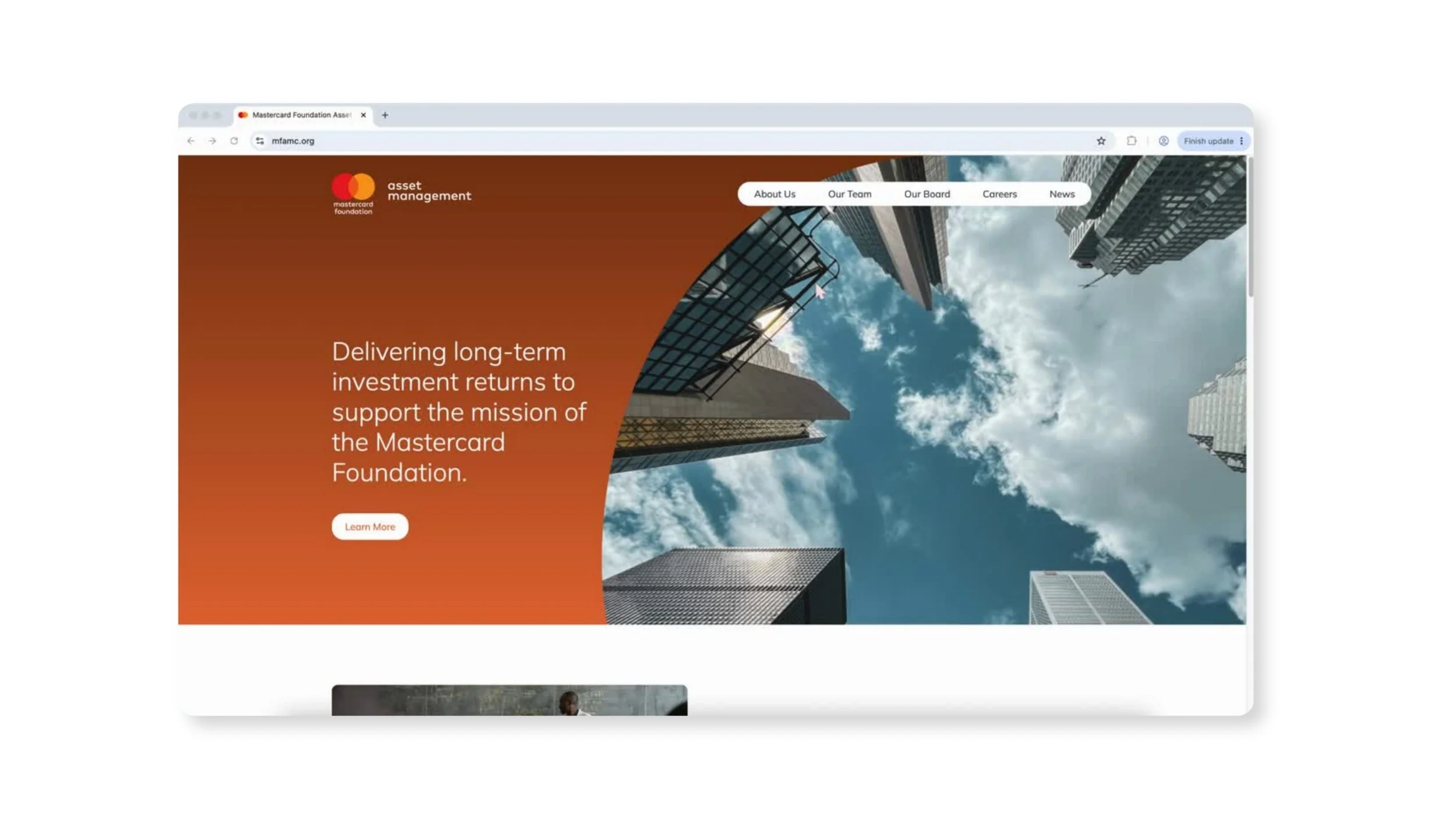
The homepage had one responsibility: help a visitor understand what MFAM is and where to go next within seconds. Rather than filling the page with information, I focused on clarity, hierarchy, and obvious next steps. Every section had to earn its place.
Designing for Multiple Audiences
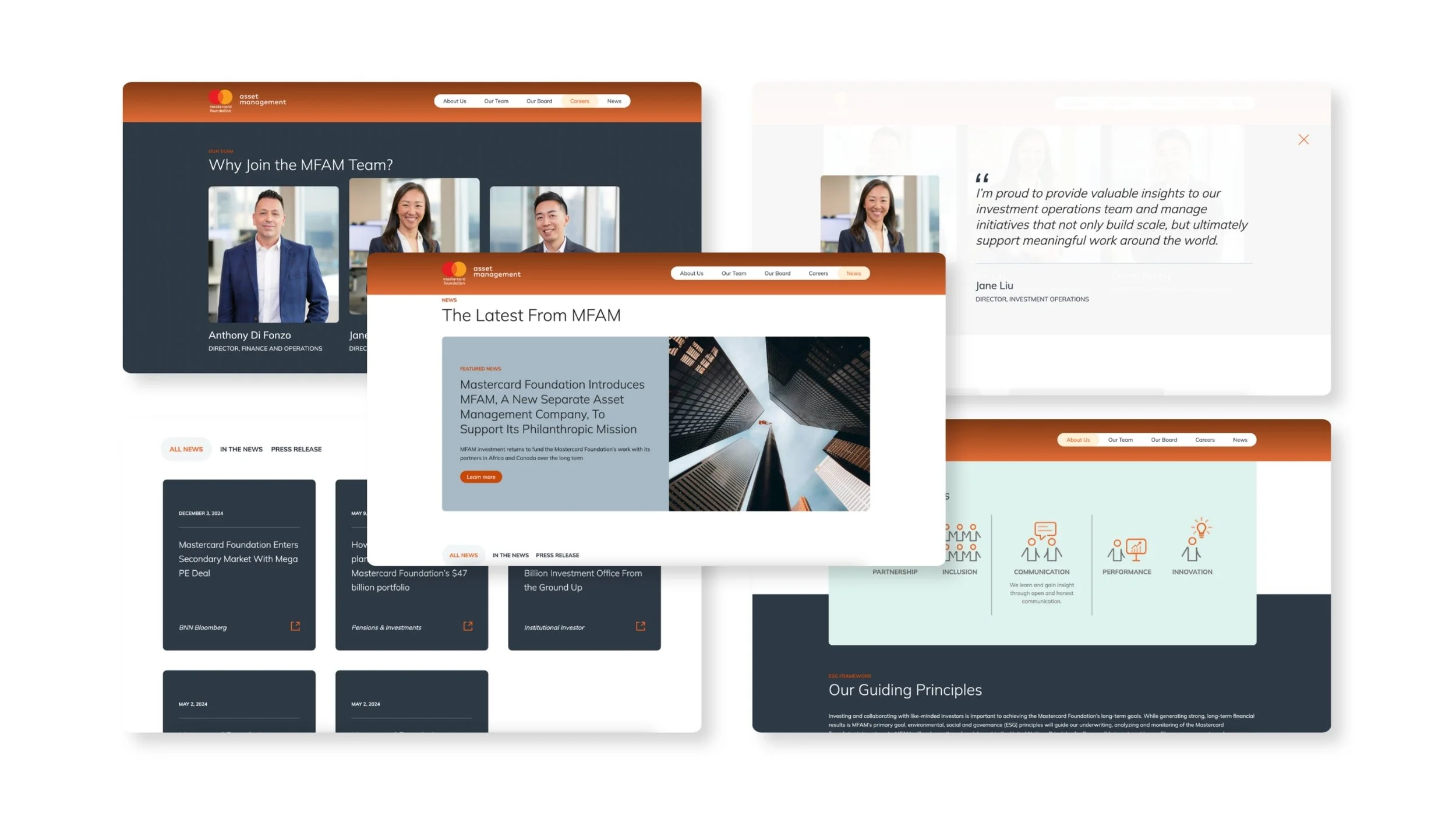
Each of the three audiences arrived with different goals. Rather than optimizing for one, I mapped the primary tasks each group needed to accomplish and organized the content and navigation around those priorities. The result was a site that felt simple despite supporting three distinct user journeys.
Design System
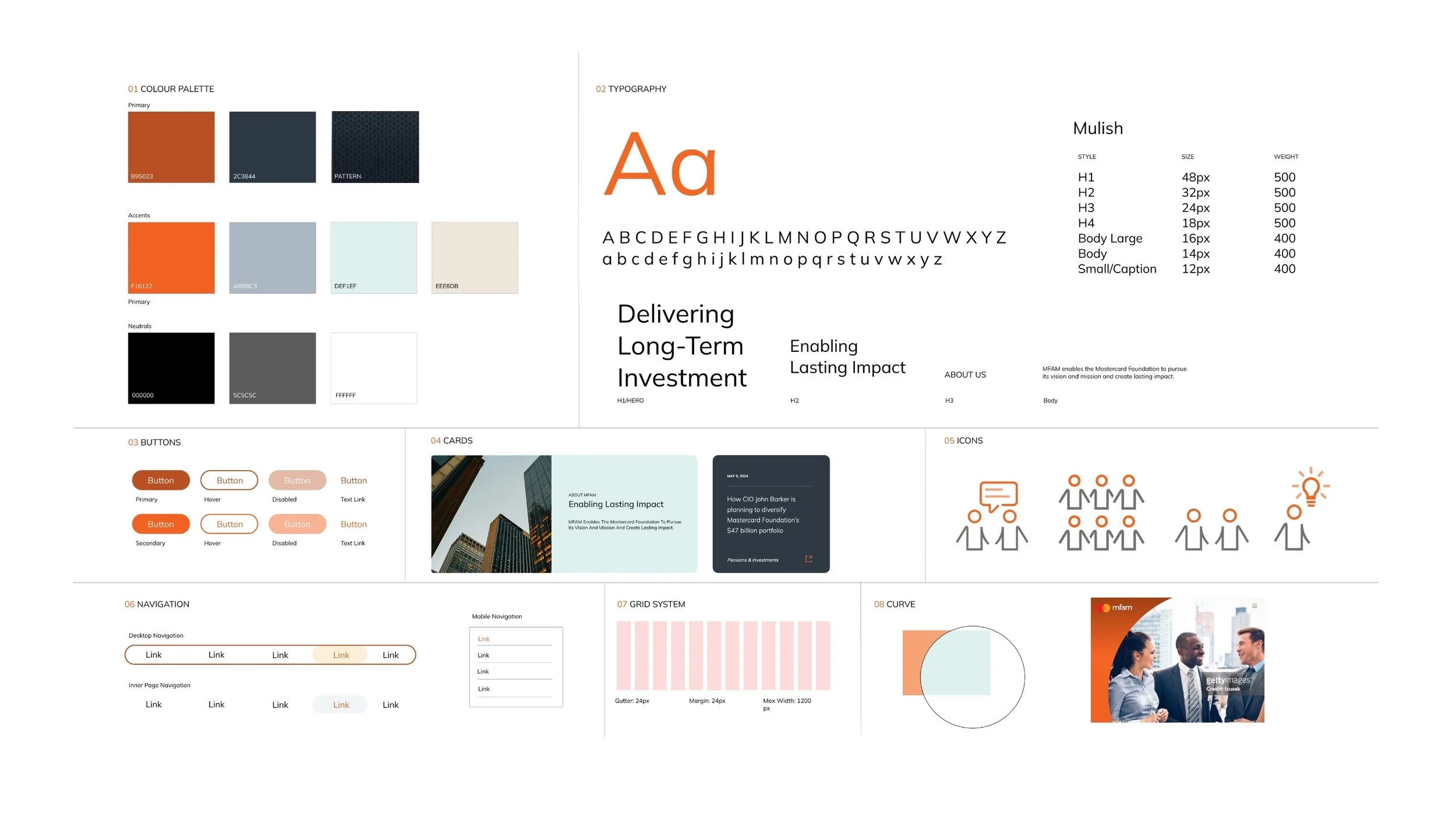
Once the experience was established I built a reusable component library in Figma. Buttons, cards, navigation patterns, typography, spacing, and layout modules were standardized to make implementation faster and future updates consistent. The design system became the direct foundation developers used throughout the build.
Responsive Design
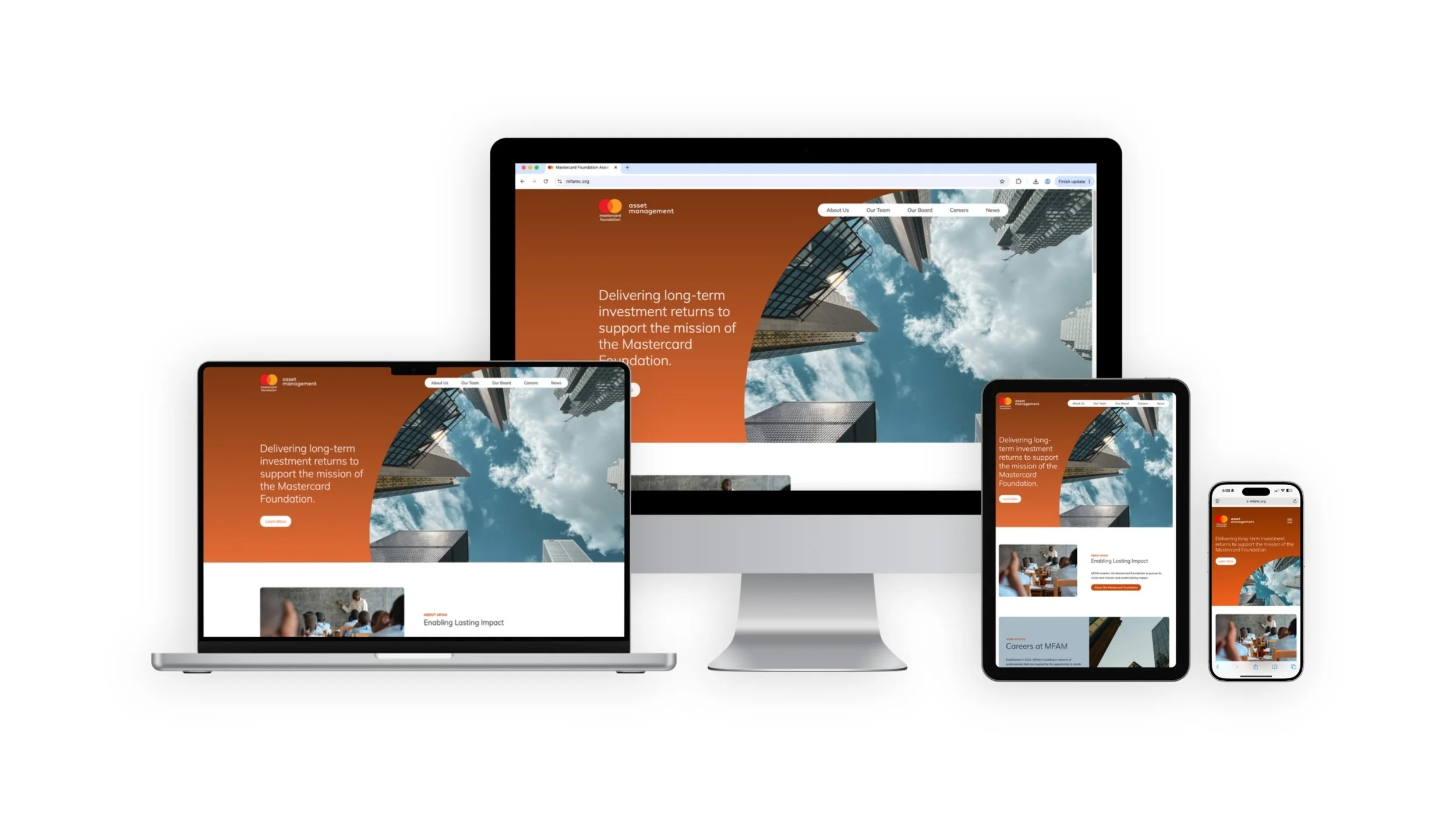
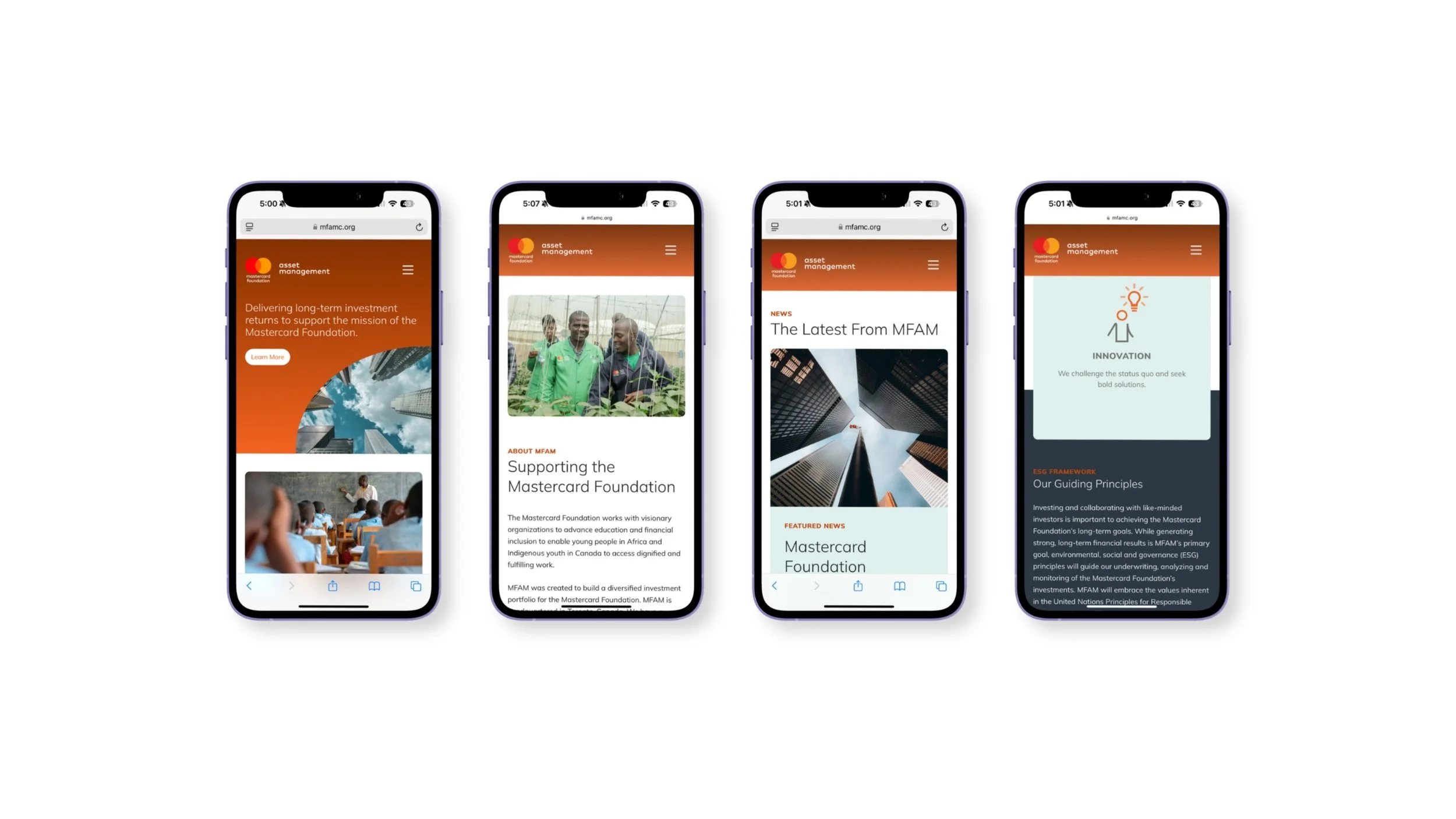
The experience was designed across desktop, tablet, and mobile from the beginning, not adapted afterward. Each breakpoint was intentionally considered to preserve usability while respecting the constraints of each device.
Development QA
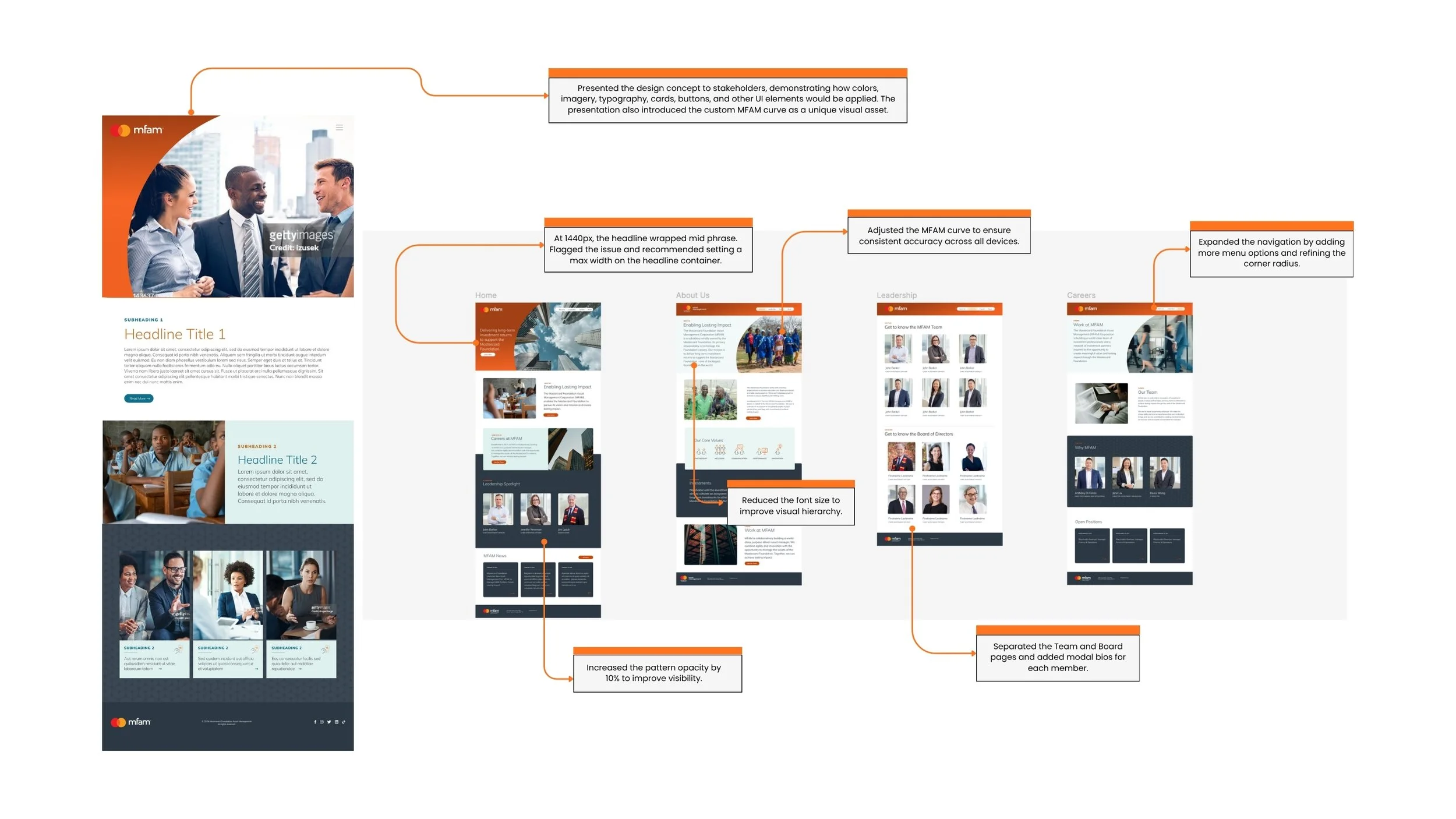
Design did not stop at handoff. Throughout development I reviewed every build iteration against the Figma files, flagged issues with specific detail, and worked directly with developers to resolve them before launch. Staying close to the build meant the site that launched was the site that was designed.
Social Media Templates
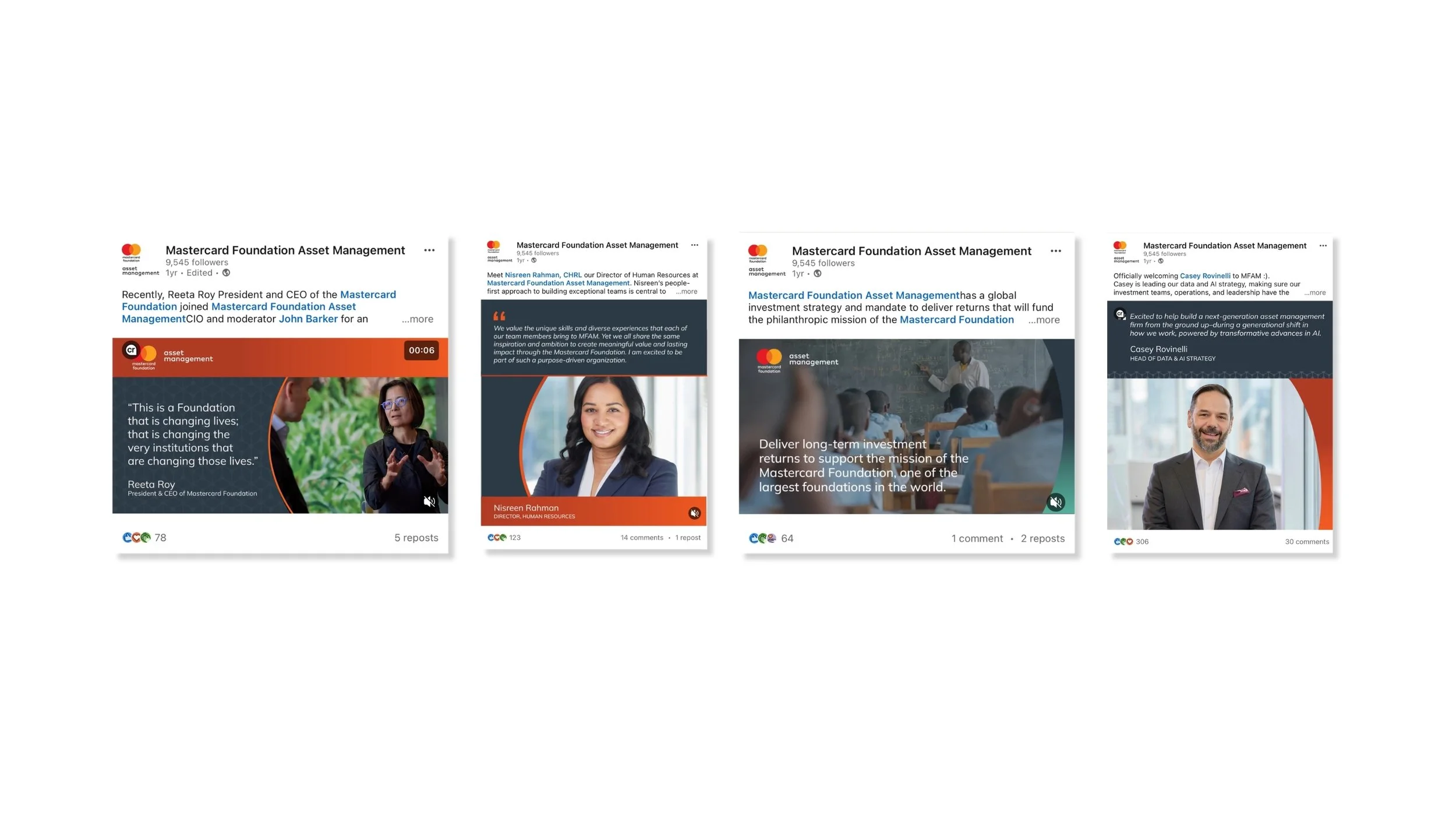
Following launch I designed a flexible social media template system that allowed the MFAM team to produce consistent branded content without starting from scratch for every post. The template library remained in active use for the following twelve months.
The project successfully launched MFAM's first digital presence while creating scalable assets that extended beyond the website.
13,600 launch impressions
5,000 website clicks
Responsive website launched across all breakpoints
Component library adopted by developers
Social template system in use for twelve months post-launch.