Mastercard Foundation:
Weekly Motion Series
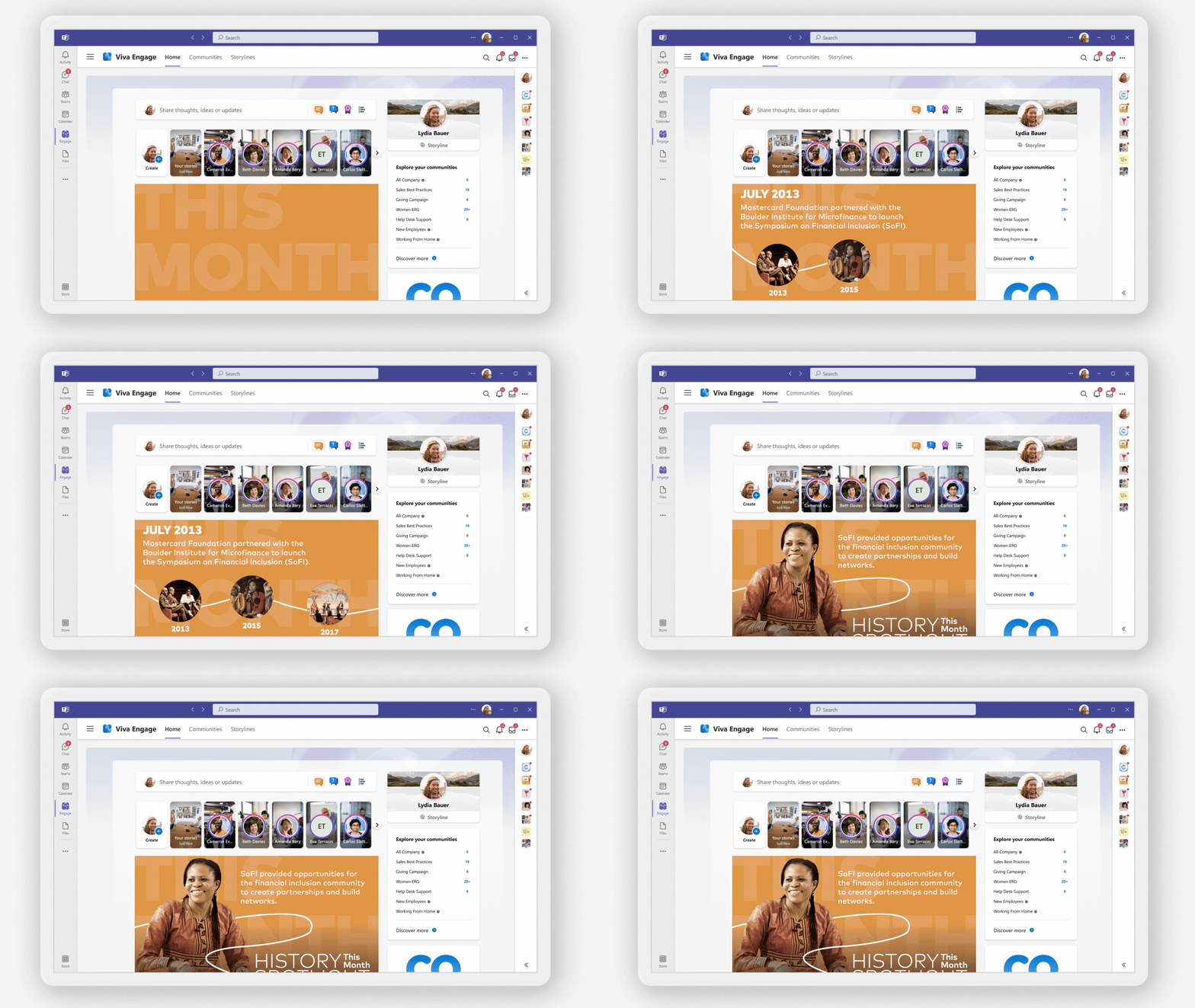
As the Mastercard Foundation prepared to mark its 20th anniversary, I created a weekly motion video series to begin the celebration internally. Working with the Corporate History team, I turned historical notes into short videos for staff, shared on Microsoft Viva Engage as part of an internal communications campaign. Each video ran under 30 seconds and was built for colleagues across every office. What began as a one-year series was extended to two.
Role
Motion Designer
& Content Strategist
Tools
Adobe After Effects
Duration
2 years (weekly)
The Challenge
The Foundation's work spans more than 40 countries, with teams in Toronto, Kigali, Accra, Nairobi, Kampala, Lagos, Dakar, and Addis Ababa. Its Corporate History team needed a way to document and share the Foundation's legacy, and to help staff understand its origins, milestones, and impact, ahead of the 20th anniversary.
The source material was dense: historical notes, dates, and milestones that don't naturally hold attention in a busy internal feed. My challenge was making history feel engaging and easy to absorb in under 30 seconds.

My Approach
Each week, I received a content sheet with the historical notes for that episode. From there, I owned the process end to end:
Research and sourcing. I searched the Foundation's image database for visuals that fit the story.
Content strategy. I worked out what mattered most in the notes and shaped it with a social media mindset: lead with what's interesting, keep it scannable, and make the takeaway easy to grab.
Motion design. I built each video in Adobe After Effects, using animation to guide viewers through the content.
Publishing. Each video went out weekly on Viva Engage.
A Visual System Built for Weekly Delivery
To keep pace and keep the series recognizable, I created three recurring formats, each with its own colour:
Historical Spotlight Flashbacks, which revisited key moments in the Foundation's story
This Month, which connected history to the current calendar
Then and Now, which showed how the Foundation's work has evolved
Each format gave colleagues a familiar frame, so they knew what they were watching at a glance, while the content, imagery, and pacing changed with each week's material. The system let me move quickly without making episodes feel repetitive.
Results
The series drove a noticeable surge in engagement on Viva Engage, and colleagues found the content more appealing than before.
Staff knowledge of the Foundation's history and overall engagement increased.
The videos contributed to the Foundation's historical archiving initiative, giving the Corporate History team a lasting record of its story.
The series supported continued alignment around the Foundation's mission and future direction.
Its success led the Foundation to extend it from one year to two.
Reflection
This project taught me how to create content quickly without losing quality. A weekly deadline for two years meant building a system I could rely on and moving fast from content sheet to finished video.
It also taught me how to take large batches of information and simplify them for an audience. Every week I had to decide what mattered most, cut the rest, and present it so people could take it in at a glance. That skill now shapes how I approach any project that starts with dense material.